
Tony · Ph.D. in Cybersecurity
Hanoi, Vietnam
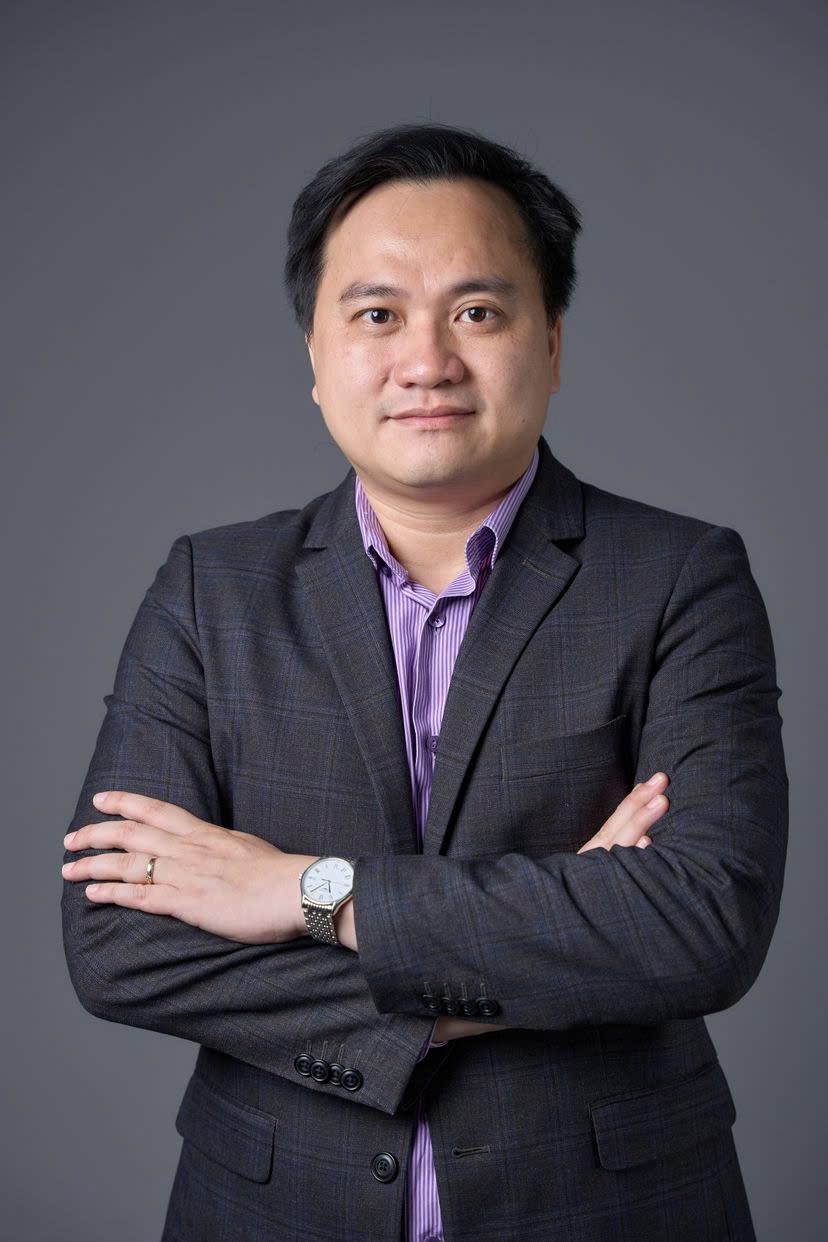
I am an Assistant Professor of Computer Science (Cybersecurity) at VinUniversity and Head of Innovation at the National Barcode Center (NBC). I am also the Founder of VCyber Lab at VinUniversity, the Cybersecurity & AI Applications Research Lab. On the industry side I founded and run VCyber Technology, a software company developing enterprise digital-transformation and secure-communication products, including OKI secure messaging and OKA secure storage. I received my PhD and completed my postdoctoral research at Deakin University (Australia), and hold a Master's degree from the Queensland University of Technology (QUT).
My research centers on Post-Quantum Cryptography (PQC), AI for Cybersecurity, IoT Security and Robotics Security. I have published across leading Q1 journals such as IEEE TDSC and IEEE TIFS, together with a range of international publications, research projects, awards and industry collaborations.
Beyond my academic work, I also work across government, academia and industry — particularly in cybersecurity, digital transformation and national digital infrastructure. My work includes supporting regulators and enterprises in implementing Vietnamese technical standards such as QCVN 135, QCVN 11, QCVN 06 and QCVN 134, providing technical consulting for regulatory bodies, testing laboratories and camera manufacturers in meeting the required technical criteria.
Some leadership and advisory roles:
I hold professional certifications in cybersecurity (Certified Ethical Hacker), machine learning (IBM), IoT, quantum computing, cryptography and blockchain. My main areas of expertise include cybersecurity, AI, network security, and quantum technology, with an interdisciplinary focus on machine learning and data science.
A learning path that has progressed from electronics to a doctorate in cybersecurity.
Selected academic and cybersecurity achievements at the international level.
An international CTF competition series organised by the International Cyber Security — Center of Excellence (INCS-CoE) in collaboration with leading universities. The 2022 edition was hosted by the Massachusetts Institute of Technology (MIT).
Presented to the School of Information Technology HDR student with the strongest research and academic performance.
Named to the Dean's List for excellent academic performance in Semester 2, 2019 and Semester 1, 2020 at Queensland University of Technology.
Experience across academic research, industry and national digital infrastructure.
Research and develop advanced technologies for national digital infrastructure, including barcode, national traceability, electronic label, digital product passport and related national digital platforms.
Teaching — Develop and teach accredited courses in cryptography, cybersecurity and networks using active-learning methods; supervise undergraduate and graduate students.
Research — Conduct and publish research in cybersecurity and network security, seek external funding, and contribute to interdisciplinary communities; with annual targets for Q1 publications and funded projects.
Service — Advise and support students, contribute to college initiatives, and participate in faculty and recruitment committees.
SOCRATES project (PQC & VPN) — Designed and implemented an automated hybrid Post-Quantum Cryptography system to mitigate both classical and quantum attacks; deployed it on cloud servers and evaluated it under different network conditions.
Publication submitted to IEEE TIFS (under review).
Designed test plans, cases, scripts and supporting data; analysed and reported test activities; provided security, platform, service and infrastructure expertise.
Achievement — Delivered the V-Key platform; led the EJBCA migration to WebLogic 12c, saving €98K for Product Engineering.
Designed and executed test scenarios, cases and automated scripts; built scalable, robust automation frameworks; configured lab network topologies.
Achievements — Excellent CC network support (2016); Fast-Track program for top 5% (2015); PA5 highest appraisal, promoted 2 levels (2014).
Set up and configured the topology for Vietnam's network backbone; troubleshooting 24/7; planned, designed and managed all LAN/WAN projects.
Knowledge engineered to be mastered — and measured.
An updated cybersecurity course for 2026 at VinUniversity, building on adversarial thinking, secure system design, user authentication, cryptography and real-world threat analysis.
An updated cryptography course for 2026, covering one-way functions, encryption, digital signatures, pseudo-random generation, zero-knowledge and secure protocols with rigorous proofs of security.
Teaches computer networking with an emphasis on the Internet — the Web, email and peer-to-peer networking; data transmission and encoding; circuit and packet switching; LAN technologies; routing, switching and congestion control; network security; and wireless and multimedia networking including 4G/5G, WiFi and Bluetooth.
Covers systems programming and operating systems — concurrency, scheduling and synchronization; memory management; file systems; security; networking; and parallel and distributed computing.
Covers the technical and social understanding of why security and privacy matter, how to think adversarially, and how (and how not) to design systems and products — user authentication, cryptography, malware, behavioural economics in security, human factors, privacy and anonymity, side channels, decoys and deception, and adversarial modelling, grounded in real-world systems and attacks (Bitcoin, Stuxnet, retailer breaches, implantable medical devices, health apps).
An introductory course in cryptography — one-way functions, encryption, digital signatures, pseudo-random number generation, zero-knowledge and basic protocols, with emphasis on fundamental notions and constructions with proofs of security based on precise definitions and assumptions.
Foundations of cyber security management for organisations: security assessment, policy development and risk management through methodological and procedural techniques — contingency planning, risk assessment, compliance standards, legal and ethical issues, SETA, incident response and auditing.
Tutor for the subject. Students learn the data-analytical methodologies used to investigate cyber security problems — processing and analysing data relevant to security systems and applications, and the scripting techniques and solutions required for data analytics in a cyber security context.
Tutor for the subject. Gives network-security-minor students the advanced understanding of networks needed for success, covering advanced and emerging technologies such as Software-Defined Networks, IoT, and AI-based networking.
Seven research frontiers, one mission: securing the intelligent future.
A growing library of peer-reviewed research in the world's top venues.
Visit my Google Scholar and ORCID profiles for the complete list. To date: 11 journal papers (7 Q1) in IEEE venues and one IEEE conference (rank B).
As a regular reviewer for journals including IEEE TDSC, IEEE Networking Letters, IEEE Internet of Things Journal, IEEE Open Journal of the Computer Society, IET Networks, and EAI TRIDENTCOM 2021, I regularly review current research in network technologies and IoT security.
Roles connecting academia, industry and the public sector.
Supporting the development of the next generation of researchers through practical research experience.
Mentoring higher-degree research students is an important part of my academic work. I currently mentor students at VCyber Lab and VinUniversity.
Research collaboration across institutions and disciplines.
At VinUni I collaborate with Prof. Andrew on cybersecurity and AI, and with Prof. Dinh and Prof. Long on IoT. For robotics I work with Prof. Long, Prof. Thanh and Prof. Truong, and with Dr. Syed on post-quantum cryptography. Beyond VinUni, I am working closely with Dr. Keshav Sood as co-lead on an external grant application to the Department of Defence.
These experiences have helped me better understand how research funding is developed for critical technologies. They also provide a foundation for pursuing future grants and industry partnerships in cybersecurity, AI and post-quantum cryptography.
Opportunities to work together on secure and intelligent technologies.
We are recruiting Research Assistants, Ph.D. students, Master's students, and Postdoctoral researchers to join research projects in cybersecurity, AI and smart sensing. Current research directions:
Applicants with a strong technical background and an interest in deep-tech research and practical impact are welcome to apply.
Academic references from senior scholars and university leaders.
Thank you for visiting my website.


